
Access Control Wiring in San Jose CA – Readers, Locks & Panels Wired Right
Cable from every controlled entry to the controller: card readers, position contacts, exit devices and lock power, labeled opening by opening and tested before your integrator programs the system.
Access control wiring is part of our security infrastructure service. We wire entries for offices, labs, warehouses, clinics and commercial multi-tenant buildings across San Jose and neighboring cities.
- California C-7 telecom license (CSLB #[NUMBER])
- Wiegand and OSDP readers
- Opening-by-opening labeling
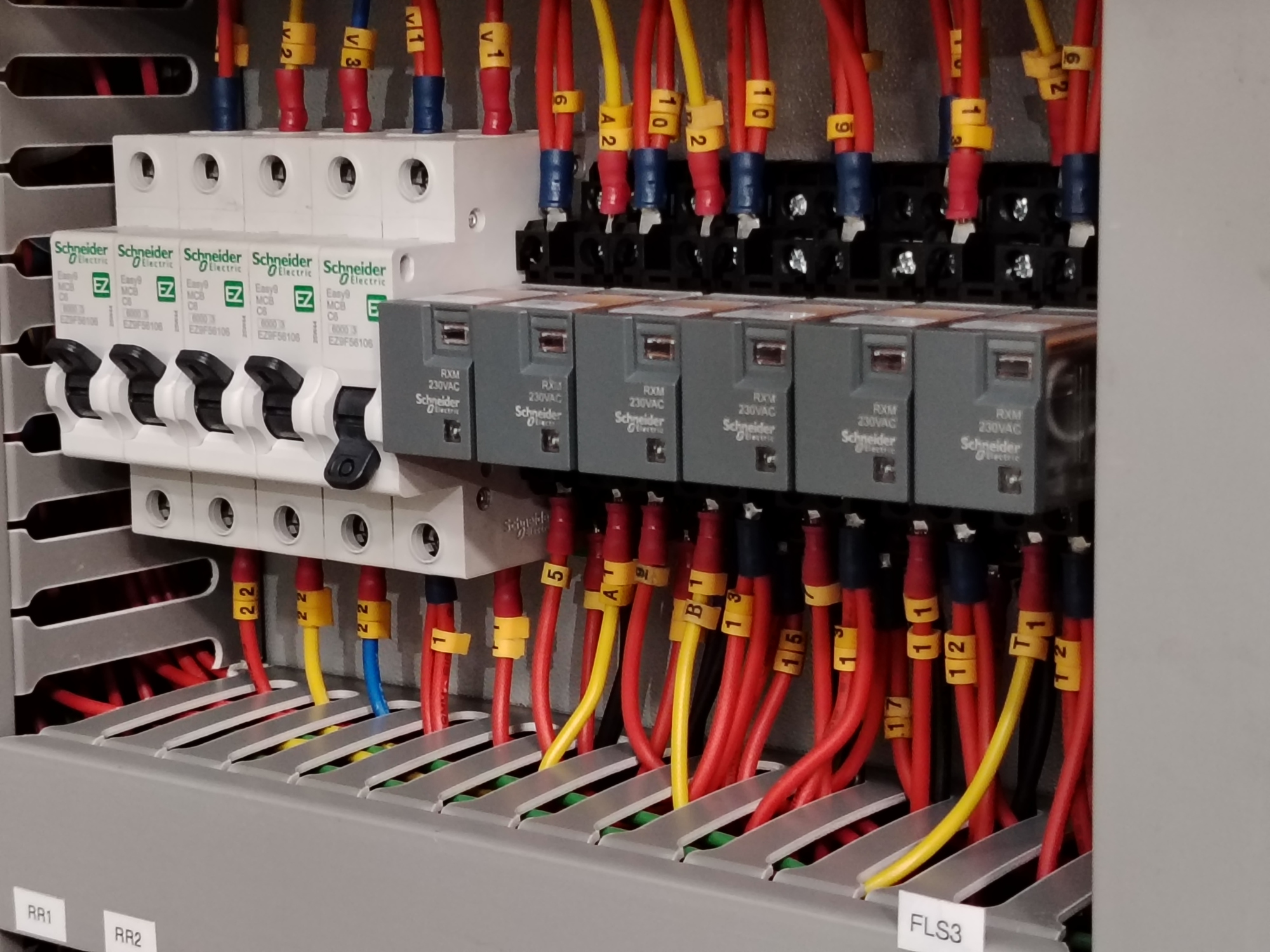
Access Control Wiring Services in San Jose
Everything between each entry and the controller, installed by our San Jose team.
Card reader cable
Shielded cable from each reader to the controller, run for Wiegand or OSDP readers.
Door position switches
Contacts wired so the controller knows when an entry is open, forced or held too long.
Request-to-exit devices
Motion sensors and exit buttons wired so people can leave without logging a forced entry.
Low-voltage electrical wiring for locks
Power cable to electric strikes, maglocks and electrified hardware, sized for the lock’s current and run length.
Panels and power supplies
Controllers and power supplies mounted, terminated and labeled in the telecom room, with battery backup space.
Network and PoE readers
Cat6 runs to IP readers, edge controllers and the controller’s network connection.
Need cameras, intercoms or a full telecom closet too? See our complete infrastructure service.
Security InfrastructureWhat Gets Wired at Each Door in San Jose Buildings
A typical controlled entry has four or five circuits back to the controller.
| Device | Typical cable | Notes |
|---|---|---|
| Wiegand card reader | Shielded multi-conductor (often 6 conductors) | Power, data and LED/beeper lines |
| OSDP card reader | Shielded twisted pair (power plus RS-485 data) | Two-way, supervised connection |
| Position contact | 2-conductor | Reports open, forced and held entries |
| Request-to-exit | 2 to 4 conductors | Motion sensor or push button |
| Strike or maglock | Lock power cable, gauge sized to load | Fed from the controller or a separate power supply |
Many entries use a composite cable that bundles these conductors in one jacket, which speeds installation and keeps each opening’s cable together.
Wiegand vs. OSDP Readers for San Jose Sites
The reader protocol affects which cable we run.
| Wiegand | OSDP | |
|---|---|---|
| Communication | One-way, reader to controller | Two-way between reader and controller |
| Encryption | None | Available with OSDP Secure Channel |
| Supervision | Limited | Controller can detect a missing or tampered reader |
| Cable | Multi-conductor shielded | Shielded twisted pair, fewer conductors |
Your integrator chooses the protocol. We run cable that supports it, and when you’re planning an upgrade we can pull cable suitable for OSDP now.
How We Wire Doors for Business Security in San Jose
Locks control how people get in and out, so the details matter.
Fail-safe vs. fail-secure
We confirm whether each lock should unlock or stay locked when power is lost, and set up the power supply to match.
Code coordination
Maglocks and other egress hardware must meet fire and building codes, often including a release tied to the fire alarm. We coordinate with your fire protection contractor and hardware supplier.
Clean door frames
Cable is routed through frames, power transfers and transfer hinges so nothing is exposed or pinched.
Clear labeling
Every opening’s cables are labeled at the frame and the controller, with an opening schedule for your integrator.
Our San Jose Access Control Wiring Process
Six steps we follow on every San Jose project.
Site walk
We review each entry, frame type, lock hardware and the controller location with you and your integrator.
Door schedule
Readers, locks, contacts and exit devices are listed opening by opening with an itemized estimate.
Pull cable
Reader, lock power, contact and exit cable is run from each entry back to the controller.
Terminate
Cables are terminated at each device and landed on the controller and power supplies.
Test
Each circuit is checked for continuity and correct voltage at the lock.
System installation hand-off
Your integrator programs the system using our labeled opening schedule, completing the system installation.
Access Control Wiring FAQs for San Jose
Quick answers to the questions we hear most.
Do you install the locks?
We wire strikes, maglocks and electrified hardware. The hardware itself is usually installed by a locksmith or hardware supplier, and we coordinate the work.
Do you program the security system?
No. We handle the cable and terminations. Programming and credentials for the security system are set up by your integrator.
What happens to maglocks in a power outage?
Maglocks are fail-safe, so they release when power is lost. Battery backup in the power supply keeps them locked through short outages. As a low voltage contractor, we leave any new line-voltage electrical wiring to your electrician.
Can old reader wiring be reused?
Sometimes. Existing Wiegand cable may work for a like-for-like reader swap. Moving to OSDP usually works best with new shielded twisted pair.
Related San Jose Services & Nearby Cities
Explore related pages, our other services, and the nearby cities we cover.
Nearby cities we serve
We also serve these 10 neighboring cities. Pick yours to see local service details.
Request a San Jose Access Control Wiring Quote
Tell us how many entries your San Jose site has, what hardware you plan to use and where the controller will go. We’ll return an itemized estimate covering cable, terminations, power supplies, labor and testing.
C-7 Licensed Installer & Contact Details
San Jose Telecom Techs97 E Brokaw Rd, San Jose, CA 95112
Email: [email protected]
What to include in your request
- Number of entries and gates
- Lock types (strike, maglock, electrified hardware)
- Reader brand or protocol, if chosen
- Controller or telecom room location
- Your integrator, if you have one